Studio
Smaller pieces. Motion, AI tools, brand work.
The work I make alongside the flagship projects, where the brief is shorter, the turnaround is faster, and the craft still has to hold.
The System That Outgrew Itself
Hundreds of components, years of drift, one system rebuilt to be handed over.
A design system is only as strong as the next designer's first day inside it.
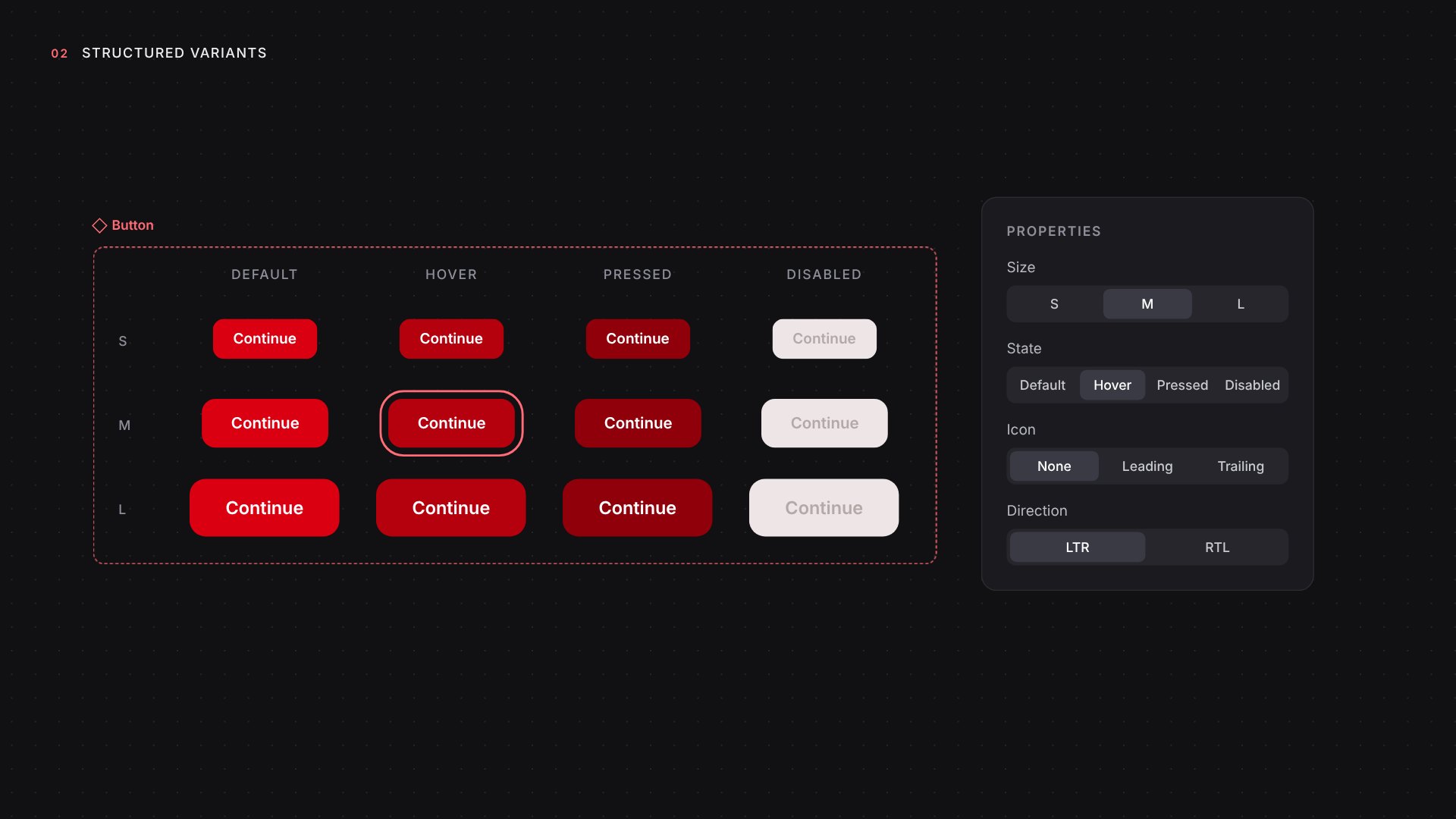
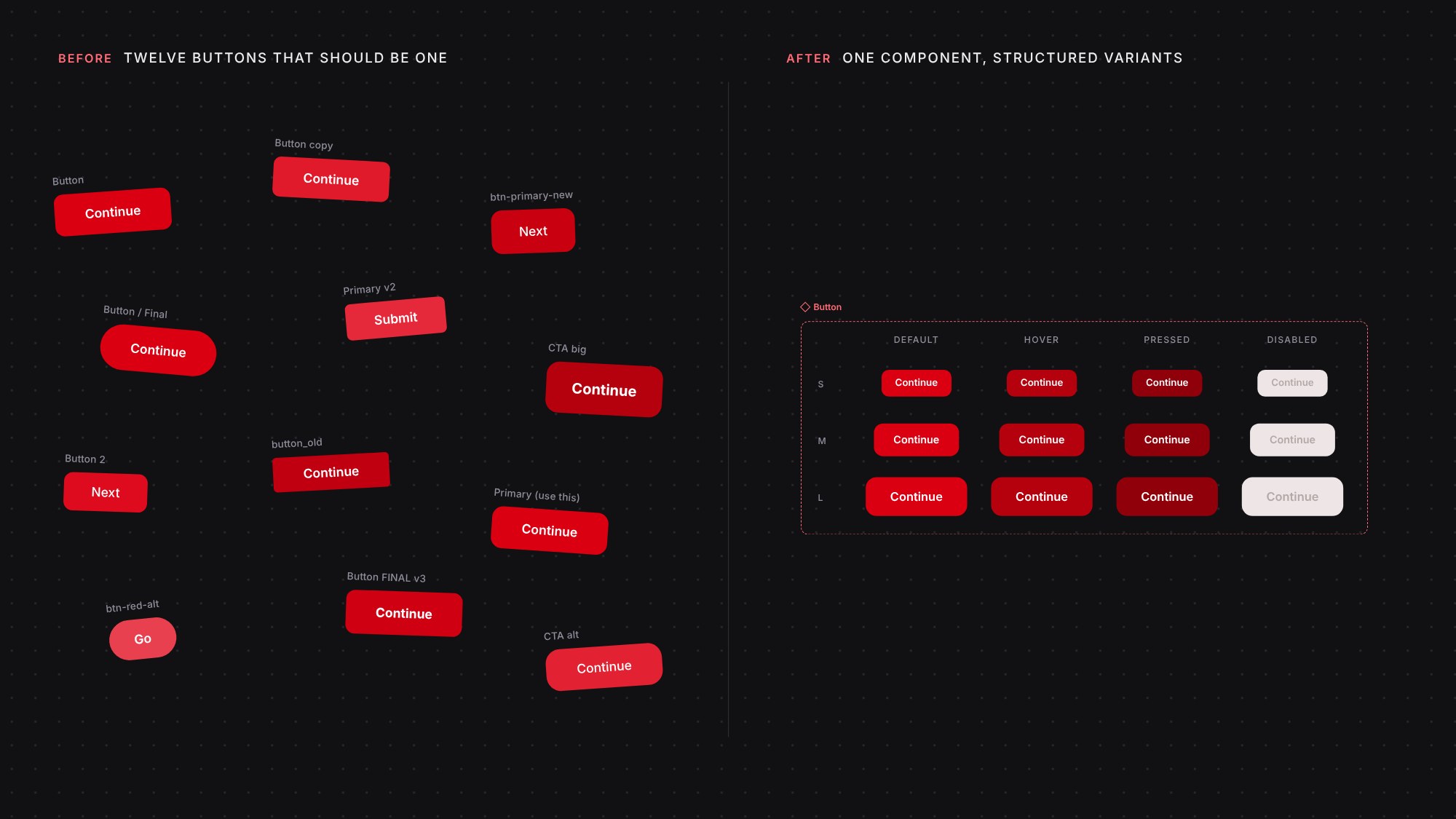
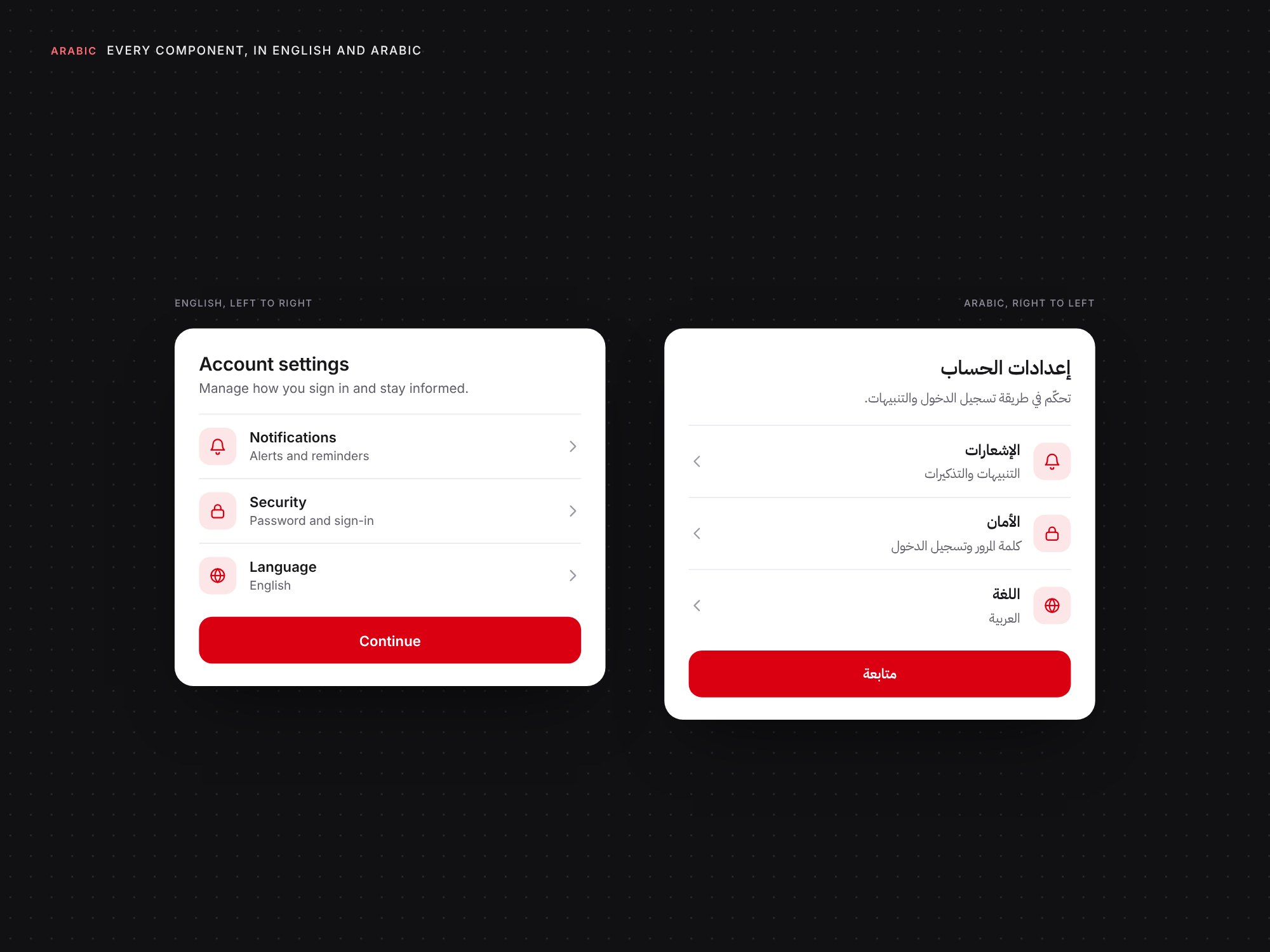
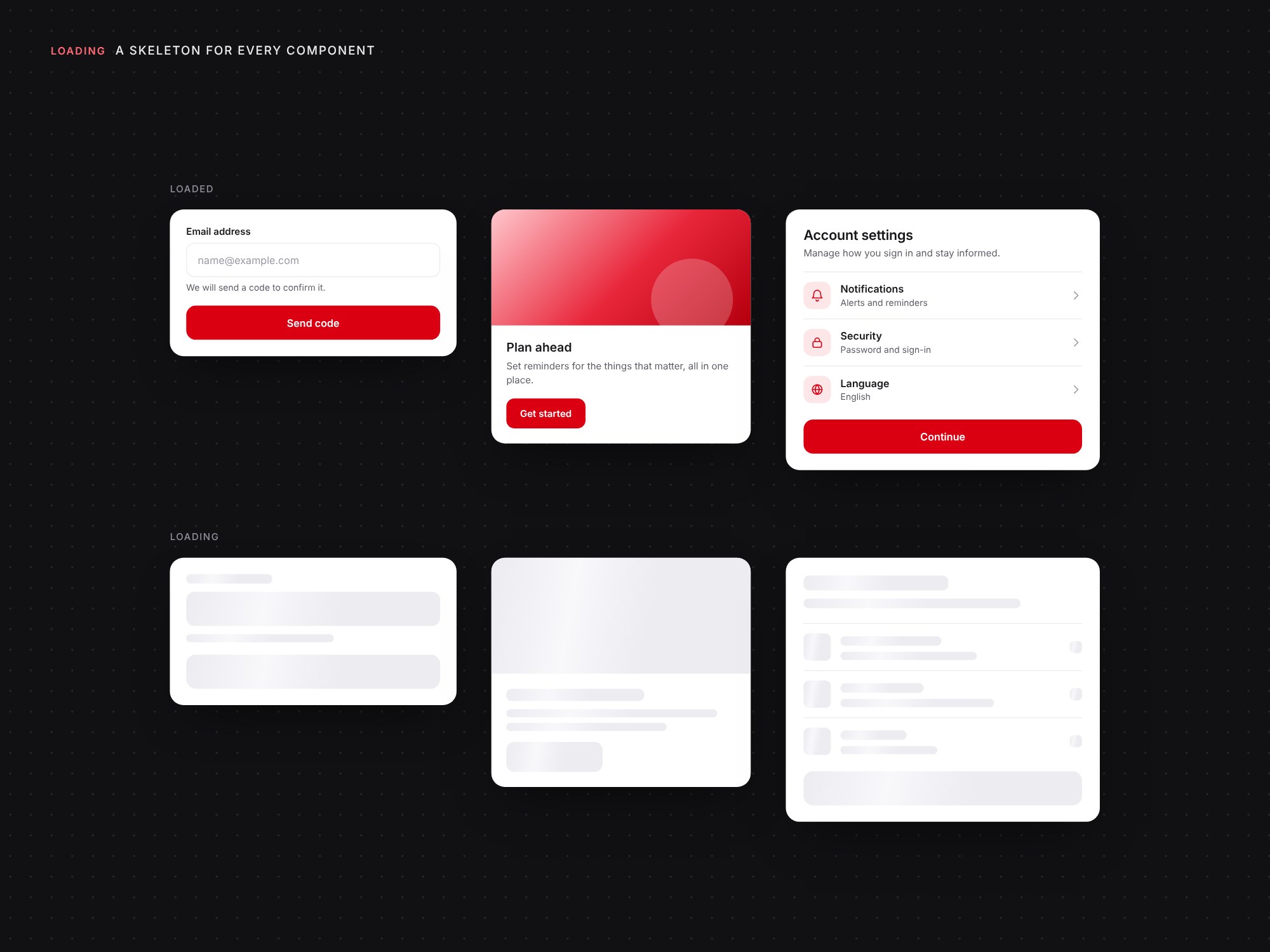
Recreated with generic components. The original system is under NDA.
A regional bank had been building on the same design system for years. Every new feature left something behind. Another asset. Another component. Another variation of a component that already existed. None of it was wrong on its own. Together, it had turned the system into something designers worked around instead of with. The brief was simple to say and heavy to do: go in, clean it up, and leave behind a system anyone could pick up.
Working solo, with direction from the bank's senior designers, I went through it component by component, across hundreds of them. Loose variations were rebuilt as structured variants. Every component got an Arabic version, built for right-to-left reading rather than mirrored and left to chance. And every component got its own loading skeleton, so even the moment between a tap and a result was designed. Cleaning up, restructuring and extending, all at once, inside a system that couldn't stop being used.
The real brief underneath it all was handover. A system this size is only useful if a designer who has never seen it can open it and find their way on day one. The measure of the work wasn't how the system looked when I finished. It was how quickly the next person could pick it up and keep building.
When AI Becomes the Whole Stack
A fully AI-built presenter for an internal banking demo.
AI should be treated like an employee, not infrastructure.
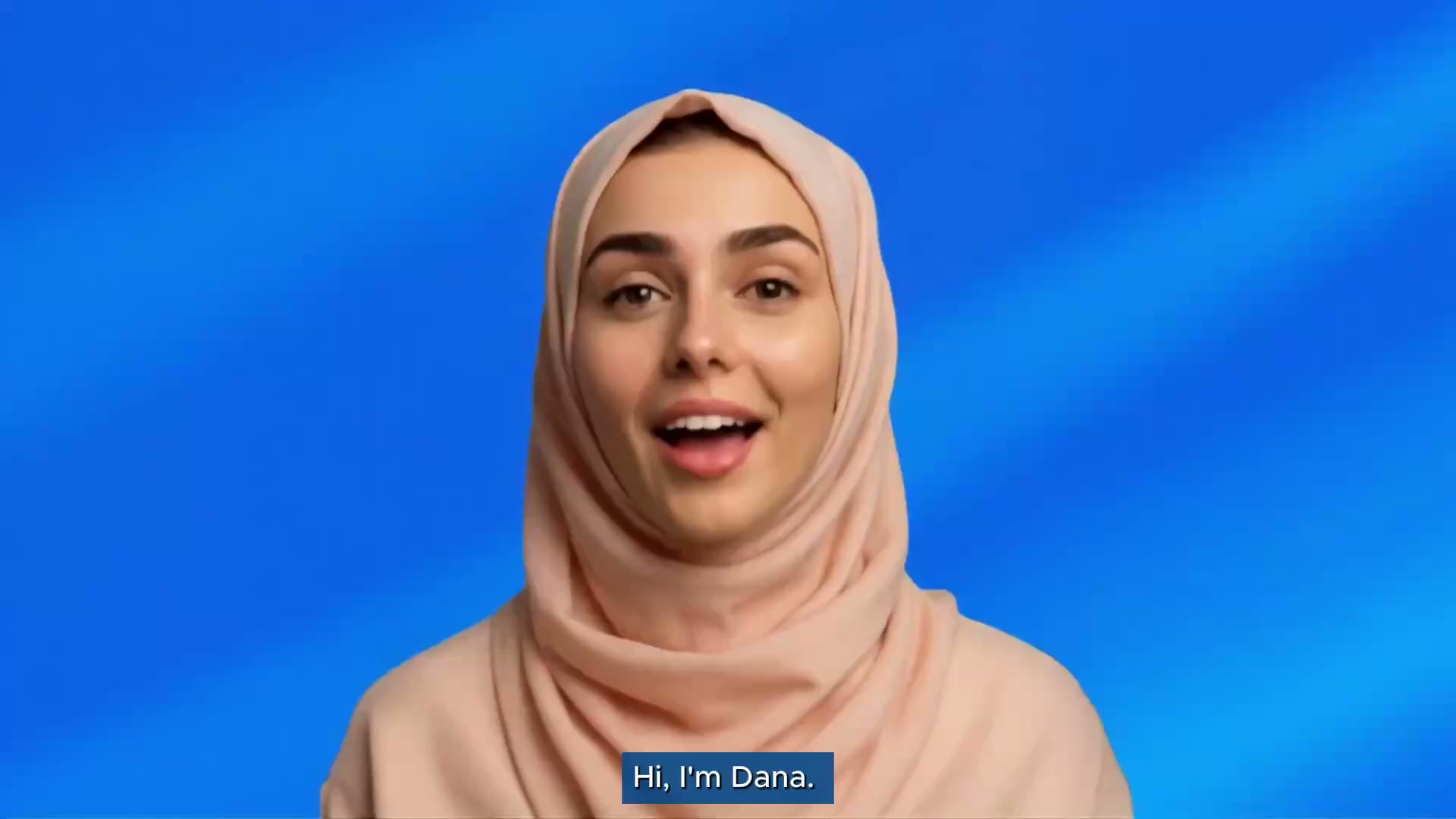


A regional bank's HR and Recruitment team needed a 30-minute onboarding demo, walked through screen by screen by an AI presenter. Every layer was AI: avatar, voice, lip sync. No filming, no casting, no studio. The only human in the production was the one stitching it all together. The brief was clear, the timeline was three weeks, and almost nothing about the workflow was solved when we started. Long-form lip sync didn't exist reliably. Voice generation kept missing the accent. The supplied avatar was unusable. We started anyway.
Three weeks of testing, breaking, and rebuilding across multiple AI pipelines. Avatar enhancement to fix the source. Voice generation through ElevenLabs after dozens of failed alternatives. Lip sync via Bith AI after every other tool gave up at the two-minute mark. The integration is the work. Multiple AI systems tested, three carried forward, all stitched into a single 30-minute deliverable. Then a late-stage script change, a vendor outage, a manual recovery from the Bith founder himself, and a final delivery that was better than the first.
The honest version of working with AI in production. Sometimes it's brilliant. Sometimes it's on sick leave. The skill isn't building around what works. It's knowing what to do when the only working tool stops working, and getting the deliverable across the line anyway.
One-Off That Outlived Its Brief
21 animations. Two days to learn After Effects.

A regional bank wanted a weekly internal emailer called Takeaway Thursdays. A short tip, a useful lesson, sent to every employee. The first version was static graphics with talking characters. The client liked the characters enough to ask for them animated. I had two days, no After Effects experience, and a brief that wanted them moving by Friday. The first set landed. Then the next set. Then it became a series.
21 videos in total, plus the same character system carrying over into other internal initiatives once the look had earned trust. The series outlived the format that started it. What began as a one-off email turned into a recurring deliverable, and the characters became part of how the bank's internal communications actually looked and felt for the next two years.
The lesson wasn't about animation. It was about how fast a brief evolves when the first delivery clears the bar. Get the first one right, the next ten get easier. Get the first one wrong, the brief disappears.
The Brief That Wouldn't Close
Six bilingual videos that closed a stalled engagement.

A brief had been on the table for over a year. The scope kept changing, the direction kept getting rejected, and several attempts had been made before the project landed on my desk as my first major content project. I picked it up at the storyboarding stage. Worked through copy with a copywriter, got a voiceover specialist on the recording, brought in the final UI screens, and built the videos end to end.
Six videos in total. Three in English, three in Arabic. The first set passed approval almost immediately, which was the point at which the engagement, after fifteen months of stalling, finally closed. The PO came through shortly after. Looking back, the work itself wasn't the hard part. The harder part had been everything that didn't ship before it.
A reminder that the value of a deliverable isn't always in the deliverable. Sometimes it's in unblocking the thing the client had given up on.